- | 8:00 am
The amazing thing about Samsung’s new folding phones is their normalcy
After seven years of iteration, a Galaxy Z Fold is just a flagship phone that unfolds—not a weird category unto itself.



Recently, when talking to Samsung Electronics America Executive VP of Mobile Experience Dave Das about the company’s new Galaxy Z Fold8 and Galaxy Z Fold8 Ultra phones, I offhandedly referred to the whole category of folding phones as “a novelty.” Das didn’t tell me I was wrong. But he did politely try to reframe my thinking about the new models, which Samsung unveiled on Wednesday at a Galaxy Unpacked event in London.
“Some call it a niche product, some call it a novelty product,” he told me. “But I think after seven generations and millions of users in the U.S. alone, and tens of millions globally, now I can honestly say Samsung foldables have become mainstream.”
He had a point. More than seven years ago, the original Galaxy Fold was most definitely a novelty—the first smartphone from a major manufacturer that could unfold into something resembling a small tablet. It was also, as Das acknowledged, “a bit hefty.”
Oh, and Samsung’s launch devolved into a PR crisis when some of the first reviewers to get their hands on the Fold found their test units quickly broke. (The company pressed pause on the release to improve the hinge.)
Smartphones in their classic iPhone/Android chocolate-bar-shape form have not evolved all that much in the past seven years, because there just wasn’t that much left to improve. But the first Galaxy Fold was only a first pass at answering the many design questions unleashed by its folding display.
Such as: What size and aspect ratio should the interior and exterior screens be? Can you make the folded device thin enough that it doesn’t feel like you’re carrying two phones lashed to each other? How do you minimize the pesky crease in the middle of the display? What aspects of the software need to be adjusted for this new experience?
Year by year, Samsung tackled all these issues, until it had folding phones that were not merely novel, but refined. Maybe even just plain normal. For example, each year’s Fold was a bit thinner than its predecessor.
“And then, just within one year, going from the Fold6 to the Fold7, we equaled all of the prior six years’ reductions in thickness,” Das said. When my colleague Jared Newman reviewed that model, he said there was no phone he’d rather be using.
The big news this year is that there are now two Galaxy Z Fold models (along with the pocketable clamshell-style Galaxy Z Flip8).
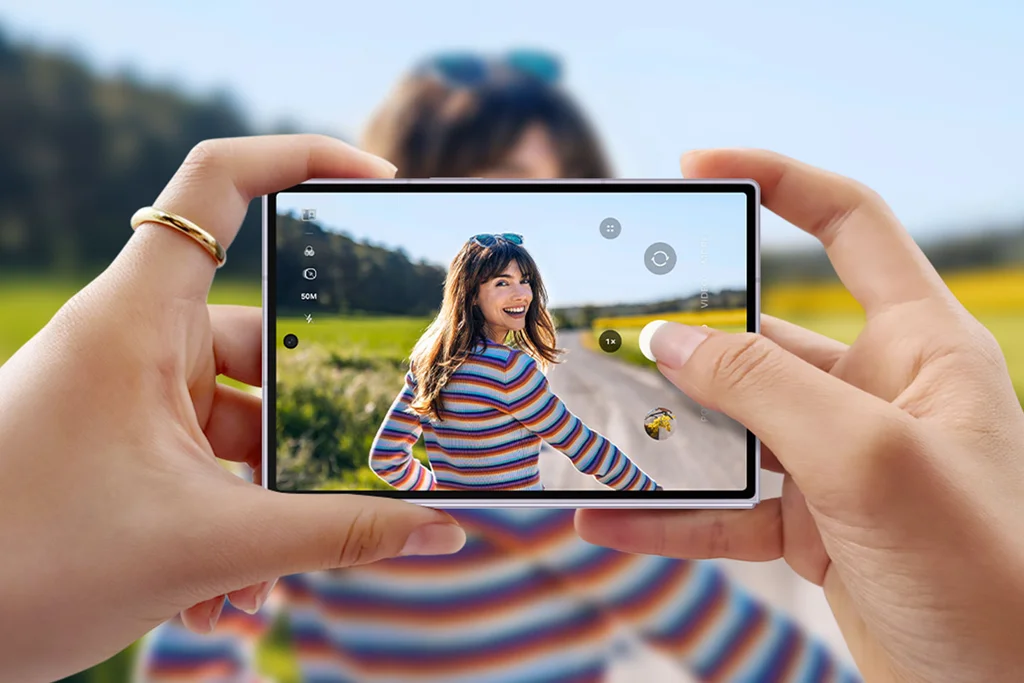
The $2,099 Galaxy Z Fold8 Ultra is the direct descendant of the Fold7 and, at 4.1 millimeters when unfolded, is the thinnest Galaxy Z Fold yet—though only by a millimeter. It has a 6.5-inch screen when unfolded, packs a larger battery, and is maxed out with cameras, including a 200-megapixel wide sensor plus ultrawide and tele sensors, with 3X optical zoom. Like previous Galaxy Z Folds, it’s aimed at people who prize the large screen’s productivity benefits, such as its ability to display spreadsheets in a way that’s actually useful.
Meanwhile, the $1,899 Galaxy Z Fold8 is, at 7.16 ounces, the lightest Galaxy Z Fold yet. Closed, its 5.5-inch screen’s 10:16 aspect ratio is noticeably squat. Unfolded, it has a 7.6-inch screen with a 4:3 aspect ratio optimized for media consumption. According to Das, that ratio delivers some of the value people found in the Galaxy Z Trifold, a $2,899 phone with a 10-inch three-panel display that Samsung sold only briefly.
“The feedback that some of our customers gave us [on the Trifold] was it’s a bit of a burden to unfold twice, and with that large of a screen size, to use it in one hand is not always the most convenient,” he said, though he stressed that “The satisfaction among consumers that purchased it was very, very high.”
Both Fold8 models have a new display that uses a thin titanium film and a titanium plate below the screen. That increases durability and enables “a creaseless experience,” Das said. I haven’t seen the phones in person yet, but The Verge’s David Imel did and was wowed.
One thing that hasn’t changed over the Galaxy Z Fold line’s seven-year history—and explains why they’re not a lot more mainstream than they’ve become—is their price point. It’s always hovered in the neighborhood of $2,000, with the Fold8 coming in at $100 less than last year’s Fold7 and the Fold8 Ultra going for $100 more.
Das said those prices are due to the phones’ advanced technology, such as the Flex Titanium display. He also acknowledged “the elephant in the room” of RAM prices, which have skyrocketed as AI data centers gobble up production capacity. Thanks to promotions and financing options, the cash outlay required to acquire these phones is not as daunting as it might be, he pointed out.
The other way to rationalize the price is thinking of a folding phone not just as an upgrade from a conventional one, but as two useful devices in one. The productivity-loving people who Das said are the Fold’s core constituents seem to be doing exactly that.
“What we have been proposing to consumers is that you might have spent $1,300 on an Ultra phone, you might have spent $500 or $600 on a tablet,” he said. “Well, now you can get both of those functions in one device with the Fold8 Ultra.”
Oh yeah, Apple
Samsung is not the only company doing interesting things with folding phones. Last year, I was impressed with Chinese manufacturer Honor’s Magic V5; China is a major market for the category, which a recent study said was dominated in the second quarter by another Chinese maker, Huawei, with Samsung in second place.
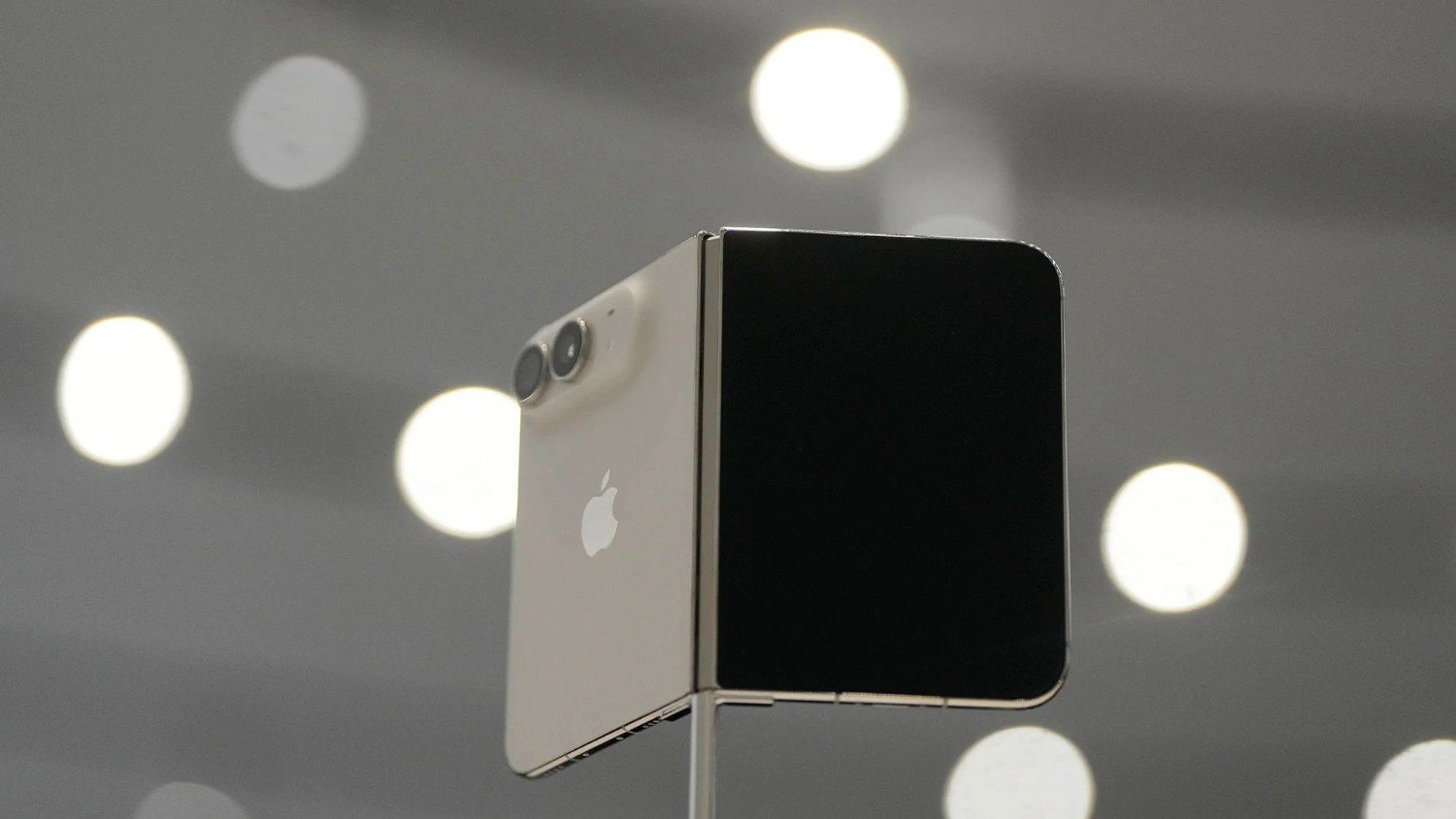
But no player in folding phones will attract more attention than Apple, which is widely expected to enter the market when it announces new iPhones in September. If the rumors pan out, the first folding iPhone may bear some physical resemblance to the Fold8, at least from a screen-size and aspect-ratio standpoint.
Asked about Apple entering the market Samsung pioneered, Das replied in the way executives generally do in such situations: “What I will say is, Samsung always welcomes competition, and more manufacturers in the foldable space is great for the category. More players raises the awareness among the general consumer population.”
Much of the time, the pioneering companies that welcome competition are, I’m sad to say, about to get creamed—including Apple itself, when it welcomed IBM to the PC market 45 years ago. This time could be different, though. Enough people are loyal to either the Samsung/Android or Apple/iOS ecosystem that there might not be that many instances of someone who would have bought a Galaxy Z Fold opting for a folding iPhone instead.
The market could end up like the one for non-folding phones, in which Samsung and Apple are twin 800-pound gorillas who peaceably coexist. (According to Counterpoint Research, they tied for worldwide smartphone leader in the first quarter of 2026, each with 21% of shipments.)
“Historically, we’ve seen a lot of customers who are very loyal to these foldable form factors, who are upgrading year after year to the new Samsung foldable device,” Das said. “Now, with the new Fold8 in this new form factor, we see even more people who we think will move from our traditional bar-type phone to this Fold phone, because we’re hitting the sweet spot of the right form factor, open and closed.”
In other words, the Galaxy Z Fold8 and Galaxy Z Fold8 Ultra’s biggest competitor might not be Apple—it might be a cheaper, unfoldable Samsung Galaxy.