
- | 9:00 am
Why the CEO of Eight Sleep thinks you need to focus on more than just sleep
Eight Sleep CEO Matteo Franceschetti on why recovery is becoming the new performance metric.
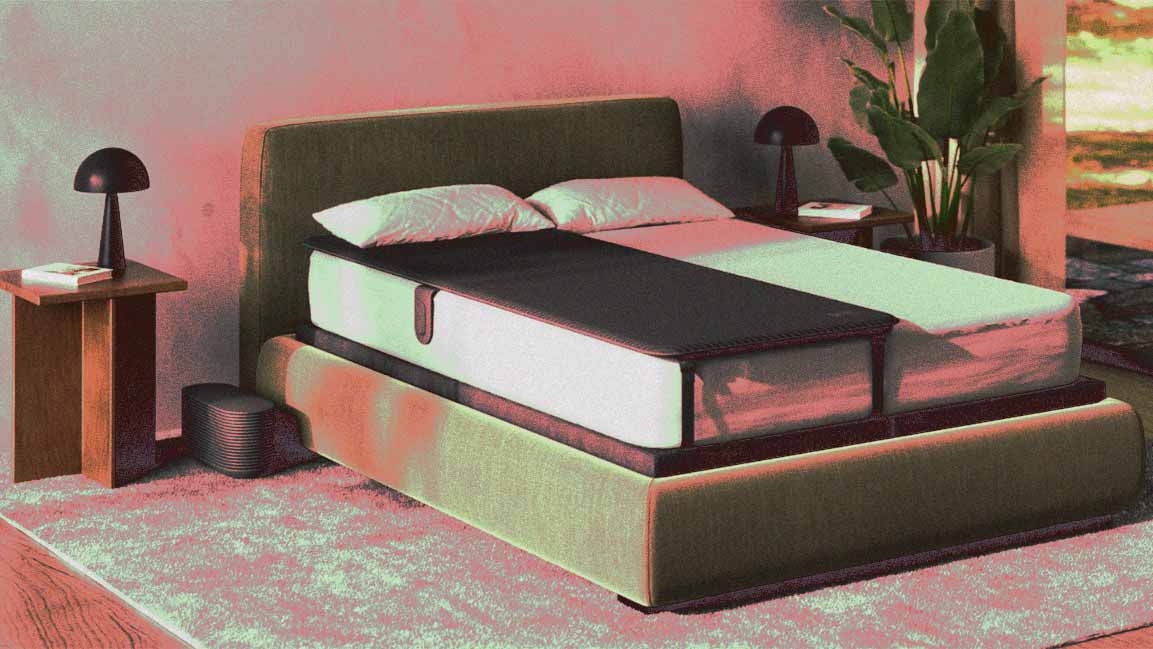


It’s Friday morning and you’ve had five hours of sleep. You know it’s not enough. Your wearable knows it’s not enough. You probably don’t need a device to tell you that. And yet you get up anyway.
Here lies the contradiction of modern wellness: We have more information about our bodies than ever, but that does not necessarily mean we’re gaining from it.
Does more data mean people are taking better care of themselves? “No,” says Matteo Franceschetti, CEO of Eight Sleep. “The gap is not where most people think.”
People today are more self-aware and care about nutrition and training more than previous generations, Franceschetti argues. Sleep is where the discipline tends to break down.
“Sleep is the part they still sacrifice first.”
For high-performing individuals, those who have their diet and activity in check but feel there are somehow fewer hours in the day to get everything done, the compromise can seem obvious. Sleep is the easiest thing to push back.
The healthcare industry has long warned about the consequences of sleep deprivation, but poor sleep is often treated as collateral damage of a hectic lifestyle rather than as a choice people make for themselves.
Franceschetti sees it differently. “I call sleep deprivation the new smoking,” he says, pointing to evidence linking sleep with longevity. Yet, he argues, “nobody engineers their night the way they engineer their day.”
That is despite the fact that people increasingly know when their sleep is poor. Wearables can show how long someone slept, how much deep sleep they got, and, increasingly, how their sleep compares with previous nights.
“The problem is that knowing is not the same as fixing, and that is where most people’s self-care stops.”
In the Gulf, there is another variable to contend with. Data from Eight Sleep shows that the UAE and Saudi Arabia rank among the top 10 globally for members who set their Pods to the coldest setting, a signal, Franceschetti says, of how heat can quietly tax recovery night after night.
SLEEP ISN’T THE REWARD FOR FINISHING EVERYTHING ELSE
We tend to treat sleep as the thing that happens after everything else is done. Franceschetti thinks that gets the hierarchy backward.
Health, he says, rests on three pillars: sleep, nutrition, and fitness. Sleep comes first.
“If you sleep two hours a night for a week, you will not recover well from workouts, crave junk food, and make worse decisions. Everything else collapses on top of it.”
Deep sleep is when the body physically repairs itself, while REM sleep helps the brain process what happened during the day.
“Skip either, and you are borrowing from tomorrow.”
That idea also challenges another assumption: that recovery is something reserved for professional athletes.
Every person asks their body and brain to perform every day, whether that means competing in a race, making decisions at work, or managing a demanding family schedule. Recovery determines how well they can keep doing it.
“I often say that recovery isn’t separate from performance; recovery is performance. I run a company, and if I want it to grow, I need to show up at peak performance, so I protect my sleep the way an athlete protects a training block,” Franceschetti says.
The question, then, is less whether people know they should sleep and more whether they are willing to build their lives around it.
UNDERSTANDING THE SLEEP BIOME
The body has its own rhythm. The modern workday has another.
Temperature is one of the biggest variables affecting sleep, Franceschetti says. The body naturally shifts through different temperature requirements during the night, while most bedrooms remain at a single fixed temperature.
“Your body needs to cool down to fall asleep and to reach deep sleep, then it needs thermal neutrality during REM, then it needs to warm gently to wake up.”
That can be particularly difficult in the Gulf, where high temperatures can persist for much of the year.
“A static bed and a fixed air-conditioner setting work against that rhythm all night, and in the Gulf, most people compensate by freezing the whole room,” he says.
The idea behind sleep technology, Franceschetti argues, is therefore not to impose another layer of complexity on the body, but to make the environment more responsive to what it is already trying to do.
“Sleep technology’s job is to make the bed do that work for you, one side at a time, based on what your body is actually doing. We are not reinventing the wheel; we simply help the body be more efficient at what nature already wants it to do.”
According to Franceschetti, that responsiveness can translate into measurable changes in sleep and recovery.
“Done well, that is worth up to 34% more deep sleep and a measurably lower resting heart rate, on average, with individual results varying.”
Temperature is not the only variable. Elevation can also affect recovery, particularly for people who snore.
“The second lever is elevation. Snoring fragments recovery for both people in the bed. We have an adjustable Base that raises the head a few degrees and can cut snoring by up to 45%.”
The system is designed to respond without requiring the sleeper to intervene.
“The Pod Cover detects snoring through chest vibrations and automatically raises the Base when snoring is detected.”
Then there are the less futuristic variables: sound, light and routine.
“The third is sound and light: soundscapes to wind down, a dark room, controls you can reach without a screen.”
For all the technology involved, though, Franceschetti’s cheapest recommendation is also the least glamorous.
“And the cheapest lever of all is consistency. Go to bed and wake up at the same time, including weekends.”
He recommends stopping caffeine eight hours before bed and points to alcohol as another major disruptor of recovery.
“Alcohol is the single biggest destroyer of HRV I have seen in our data, which is why I stopped drinking.”
THE CHEAPEST SLEEP HACK
Much of the modern wellness industry is built around finding increasingly sophisticated ways to optimize something that remains stubbornly basic: the conditions in which we live.
And sleep research itself has a long history of trying to understand those conditions. In the 1930s, sleep researcher Nathaniel Kleitman and his colleagues conducted experiments, removing themselves from daylight and other environmental cues to study the body’s natural rhythms. In the 1950s, experiments by Kleitman and Eugene Aserinsky helped reveal REM sleep, changing the understanding of sleep as a passive state.
For decades, understanding sleep meant observing people under carefully controlled conditions. The more scientists could measure, the more they discovered about what the body was doing while it appeared to be doing nothing.
Today, instead of taking people out of their normal lives and putting them in a sleep laboratory, technology can increasingly observe what happens in the environment where sleep actually occurs.
Eight Sleep has been studying sleep at scale, including through research into REM sleep, while collecting data from people in their own beds. Instead of a single controlled snapshot, the technology can capture patterns across thousands of nights and tens of thousands of people.
For Franceschetti, that represents a much bigger shift in how recovery is understood. “The most important shift is that recovery is moving from places you go to things that happen to you while you live.”
Ten years ago, he says, understanding your sleep could mean spending a night in a clinic “wired to a machine, in a hospital bed, anxious,” and walking away with one night of data.
“Today the bed itself can measure heart rate, HRV and breathing with clinical-grade accuracy, every night, with nothing on your wrist or finger, and then act on it.”
The sleep lab used to be somewhere you went. Increasingly, Franceschetti argues, it is somewhere you already are.
“Going to bed becomes more useful than a once-a-year visit to the physician, because the feedback loop is nightly.”
The scale changes too. “Where a traditional sleep study follows 50 or 200 people for eight months, we can observe patterns across tens of thousands of people in a single night.”
That same shift is happening elsewhere in recovery. Saunas and cold plunges are moving into homes and hotel gyms.
“I use heat and cold contrast myself, and it improves my sleep dramatically, but the point is that none of this should require a membership or a specialist.”
The irony is that as recovery technology becomes more sophisticated, Franceschetti thinks it should become less noticeable.
“The best recovery technology is invisible. You do not wear it, you do not charge it, you do not change your habits.”
ADOPTING AN ATHLETE’S MENTALITY TO SLEEP
You don’t have to compete in a Grand Prix for your body to need to perform. That is the thinking behind Franceschetti’s phrase “everyday athletes.”
“We use the phrase ‘everyday athletes’ for a reason. It has nothing to do with how fast you run.”
It is about adopting the level of care a professional athlete puts into their body, and the belief that the body can perform at a higher level when given the right conditions.
Formula 1 drivers, tennis players, NBA and NFL players, triathletes and cyclists use Eight Sleep’s products. For them, the argument is straightforward: when the difference between winning and losing can come down to seconds, consistent recovery becomes a strategic advantage.
Franceschetti points to Kimi Antonelli, who reportedly slept on the Pod throughout the weekend before winning at Monza from nineteenth on the grid. For everyone else, the payoff is less visible but potentially just as consequential.
“The benefit for the rest of us is the same, just measured differently: a clearer head in the 9am meeting, a steadier mood with your kids, fewer sick days, better decisions under pressure.”
Franceschetti sees entrepreneurship as its own form of endurance sport.
“Being an entrepreneur is probably the closest thing to being a professional athlete,” he says. “The athletes taught me that recovery is not what you do when you are tired; it is the training you do while you sleep.”
Treating sleep like fitness means making it part of the plan rather than whatever time remains at the end of the day.
“Treating sleep like fitness means you pay for it, you schedule it, and you measure it, the way you would a gym membership.”
The payoff compounds over time.
“When you do, the payoff is a feeling of restoration, elevated energy and confidence, and that compounds over years, not just seasons.”
THE PARADOX OF WEARABLES AND SLEEP
There is, however, a problem with turning sleep into data. Sometimes the data just gives you another thing to worry about.
“People are not overly dependent on wearables; they are over-informed and under-served,” says Franceschetti.
A wearable can tell you that you slept badly. It cannot necessarily change what happens the following night.
“Wearables may track your sleep, but they don’t actually improve it. You wake up, you see a red score, and now you have a bad night and a bad mood, with no path to a better night.”
That, he argues, is where the anxiety comes from, not measurement itself, but measurement without a clear next step.
Most Eight Sleep members, he says, already own a wearable, and many continue to use one. “For us the data is not the end point, it is the starting point. Most of our members own a wearable and many keep wearing one, which is fine.”
The more useful question is what the technology does with the information. “Does it do something for you, or does it just tell you what you already suspected?”
That question also brings the story back to the history of sleep research. For decades, scientists have developed increasingly sophisticated methods for observing what happens while people sleep. The next step may be less about collecting more information and more about making that information useful without asking people to become sleep scientists themselves.
“The best health technology is the kind you forget is there.”
At Eight Sleep, that means embedding the technology in the Pod Cover so it can monitor people throughout the night without requiring a strap, a charger, or another screen to check. It can then adjust temperature and elevation in response to the body’s signals.
“So you are not analyzing your sleep, you are benefiting from it.”
That distinction, between tracking and actually doing something, may be the more interesting story in wellness technology.
We have spent decades learning how to observe sleep. We can now measure more of it from our own bedrooms than ever before, and technology is beginning to respond to what it sees.
Perhaps the ultimate measure of whether any of it works is much less scientific.
It is Friday morning. You slept for eight hours. You don’t reach for your phone to check whether you slept well.
You just feel like you did.
“We have always believed wellness tech should be intelligent, invisible, and effortless,” Franceschetti says.
And in a world that asks more of us every day, perhaps that is the point: sleep should not become another performance metric to chase.
“Sleep should be the thing that gives something back,” he concludes.