- | 9:00 am
Egypt doubles down on EVs—can it become a regional hub?
Egypt’s fleet sector has quietly electrified faster than anyone expected. The question now is whether the policy and infrastructure can keep up
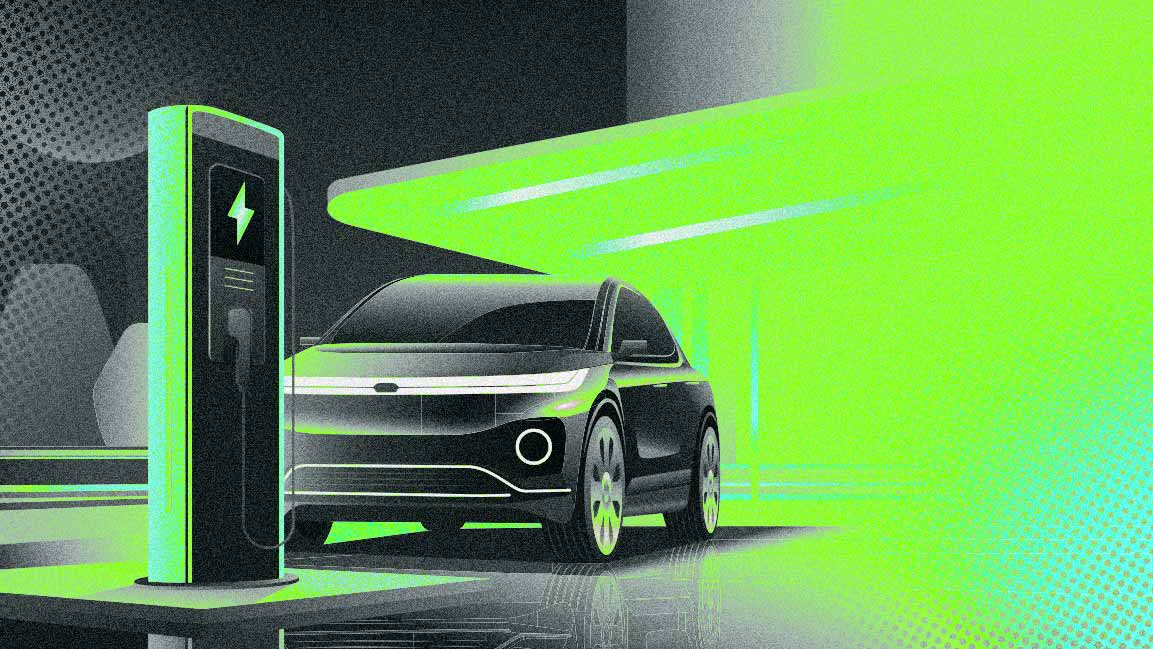


Three years ago, there were no electric commercial vehicles on Egyptian roads. Today, hundreds operate daily for Danone, Nestlé, and Egypt Post—and EVs already represent around 5% of Egypt’s commercial vehicle market, dwarfing private adoption. That sequencing, fleet-first, may be the model for how emerging markets electrify.
The question is whether Egypt can convert that commercial beachhead into a genuine regional manufacturing hub.
Through the Automotive Industry Development Program (AIDP), the Egyptian government is courting global automotive giants—including General Motors, Volkswagen, and BYD—to localize production.
Domestic players are also injecting momentum into the market by debuting some of the latest electric models. Over the past year, Kasrawy Group rolled out the Huawei-powered Avatr EVs, while General Motors, in a partnership with Mansour Automotive, launched its Chevrolet EV lineup. Simultaneously, GB Auto launched Hyundai’s Genesis EVs, and Jameel Motors introduced GAC’s Aion Y Plus to Egyptian consumers.
To support this influx, a package of incentives—ranging from tax deductions to local-content subsidies—aims to scale production capacity to 100,000 vehicles per company annually by 2032. This target includes a mandate of 7,000 EVs per firm and pushes local content levels above 35%.
“Egypt has made real progress, with customs incentives for EV imports, the AIDP, the Eco-Friendly Automotive Financing Fund, and active efforts to attract global assemblers like Geely and MG to manufacture locally,” says Dr. Aly Eltayeb, CEO at Shift EV, a Cairo-based EV retrofit specialist.
For global manufacturers, the market is approaching an inflection point. Amira Dawood, the Egypt and North Africa imported-vehicles launch leader at General Motors, sees a shift underway. “Over the past few years, there has been noticeable progress in terms of awareness and early infrastructure development, with more conversations around sustainability and electrification entering the mainstream.”
Tamer Kotb, vice president of the automotive segment at Abou Ghaly Motors, says the company will soon introduce a lineup of New Energy Vehicles, including electric and hybrid models. “With the continuous rise in fuel prices, customers in Egypt are becoming increasingly interested in vehicles that offer lower running costs without compromising on safety, advanced technology, and driving experience.”
Alongside industrial ambition, technical training programs are expanding rapidly through initiatives such as the Future Tech EV Accelerator, led by Raya Auto in collaboration with GIZ, and a $10 million Korean-Egyptian grant targeting vocational training, charging infrastructure, and startup development.
BRIDGING THE INFRASTRUCTURE GAP
Despite the visible enthusiasm, currently, EVs account for a mere 0.1% of Egypt’s estimated 11 million vehicles. A sparse charging network and consumer anxieties regarding range, battery durability, and upfront costs largely hamper uptake.
“Adoption is still constrained by a gap between interest and ecosystem readiness,” Dawood explains. “Charging infrastructure remains limited and not yet widely accessible, affordability is a key barrier for mass-market consumers, and the supporting ecosystem — including aftersales capabilities and regulatory clarity — is still evolving.”
Kotb notes that while Egypt currently has just over 500 charging points, expansion is underway. “While most of the infrastructure remains concentrated in urban areas, we’re witnessing clear expansion beyond these cities, supported by both private and public-sector initiatives.”
Dawood says infrastructure, policy, pricing, and consumer readiness need to evolve in parallel to unlock real scale. “Overall, the potential is strong, but the pace of growth will depend on how quickly these foundational elements come together.”
ENGINEERING FOR THE HEAT
Egypt’s harsh climate adds another layer of technical complexity. With summer temperatures frequently soaring above 40°C, prolonged heat exposure can severely degrade battery performance and shorten lifespan.
For local startups like Shift EV, these environmental challenges are viewed as a competitive advantage through localization.
“We design and manufacture our own battery packs in Egypt, at a facility with 200 MWh annual production capacity, so thermal performance is something we engineer for every day,” says Eltayeb. “Our battery management system algorithms are specifically tuned for Egyptian operating conditions,” he adds.
REFINING THE POLICY ENGINE
While the framework is growing, current incentives, such as customs reductions and free EV licensing, are considered modest compared with those in more mature markets.
However, external economic pressures are filling the gap. A 30% hike in domestic fuel prices has made the economic argument for EVs much more persuasive.
Eltayeb suggests that the next phase of reform should prioritize the depth of industrial value over mere assembly. “The local content framework should recognize R&D investment, not just material sourcing. Right now, a company that spends two years engineering a locally designed component gets zero local content credit for that effort,” he says.
He adds that incentives should extend to EV component manufacturers, not just vehicle assemblers. Battery packs, control systems, and power electronics are where the greatest industrial value is created, and Egypt already has companies that manufacture them locally.
Despite these hurdles, the financial commitments are massive. In late 2025, Mansour Automotive broke ground on a manufacturing facility worth over $150 million, with plans to produce 50,000 eco-friendly vehicles annually in its first phase—scaling to 100,000 by 2032.
By early 2026, Egypt secured $1.8 billion in investment agreements for renewable energy and battery manufacturing, including a landmark 10-GWh battery storage facility.
THE COMMERCIAL CATALYST
According to Shift EV, EVs now represent around 5% of Egypt’s commercial market— a rate that dwarfs private adoption. Fleet electrification benefits from predictable routes, centralized charging, and decision-making driven by total cost of ownership rather than consumer perception.
Shift EV has already contracted to electrify about 1,000 commercial vehicles, serving giants like Danone, Nestlé, and Egypt Post.
Eltayeb notes that this B2B success is beginning to filter into the consumer market. “Three years ago, no electric commercial vehicles were operating on Egyptian roads. Today, there are hundreds, and the adoption curve is accelerating.”
As commercial adoption scales, its spillover effects are beginning to shape consumer behavior.
“B2B adoption is already driving B2C demand,” Eltayeb adds. “Once the component supply chain and service infrastructure are built through fleets, the private market benefits from that foundation. The sequencing matters, and fleet-first is the fastest path in emerging markets”.