
- | 9:00 am
These ingenious new robots are helping fishing crews catch salmon more humanely and sustainably
You’ve heard of ‘farm to table’—now meet ‘boat to plate.’


Right now, sockeye salmon season is peaking in Alaska.
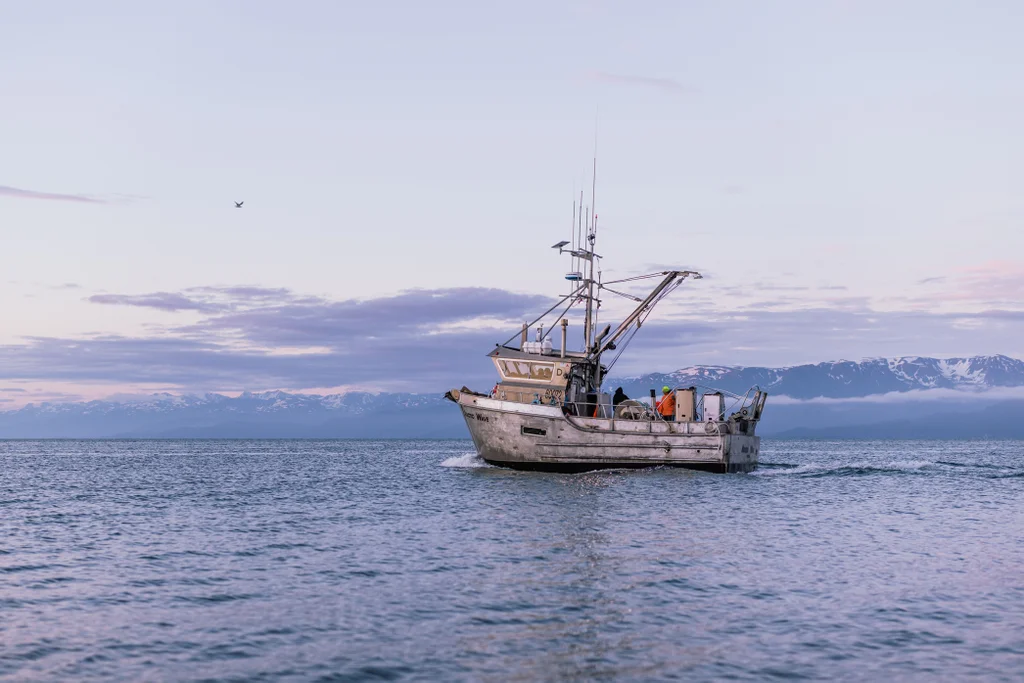
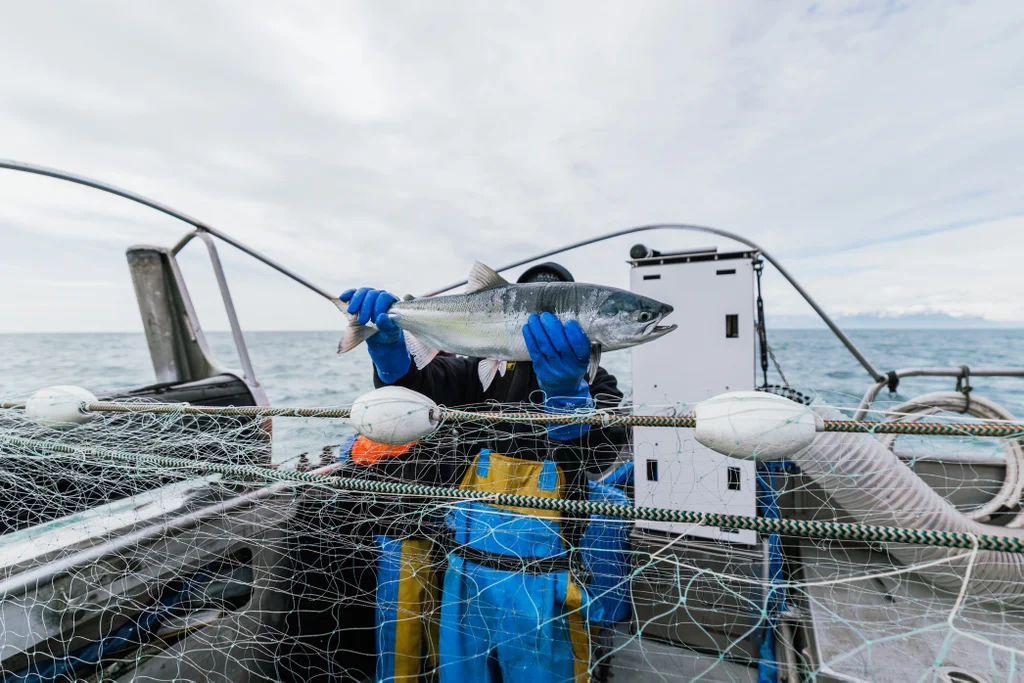
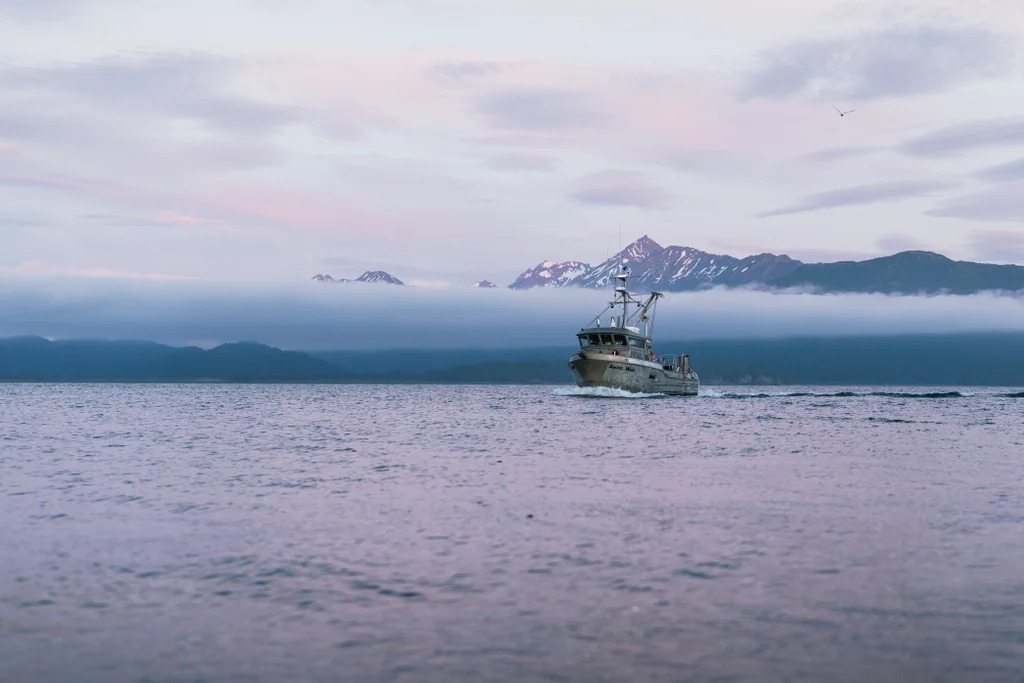
Some fishing vessels in the Cook Inlet have welcomed a new crew member, one who doesn’t complain about swells, eat, or even sleep—yet is able to harvest salmon more rapidly and humanely than any fisherman ever has.
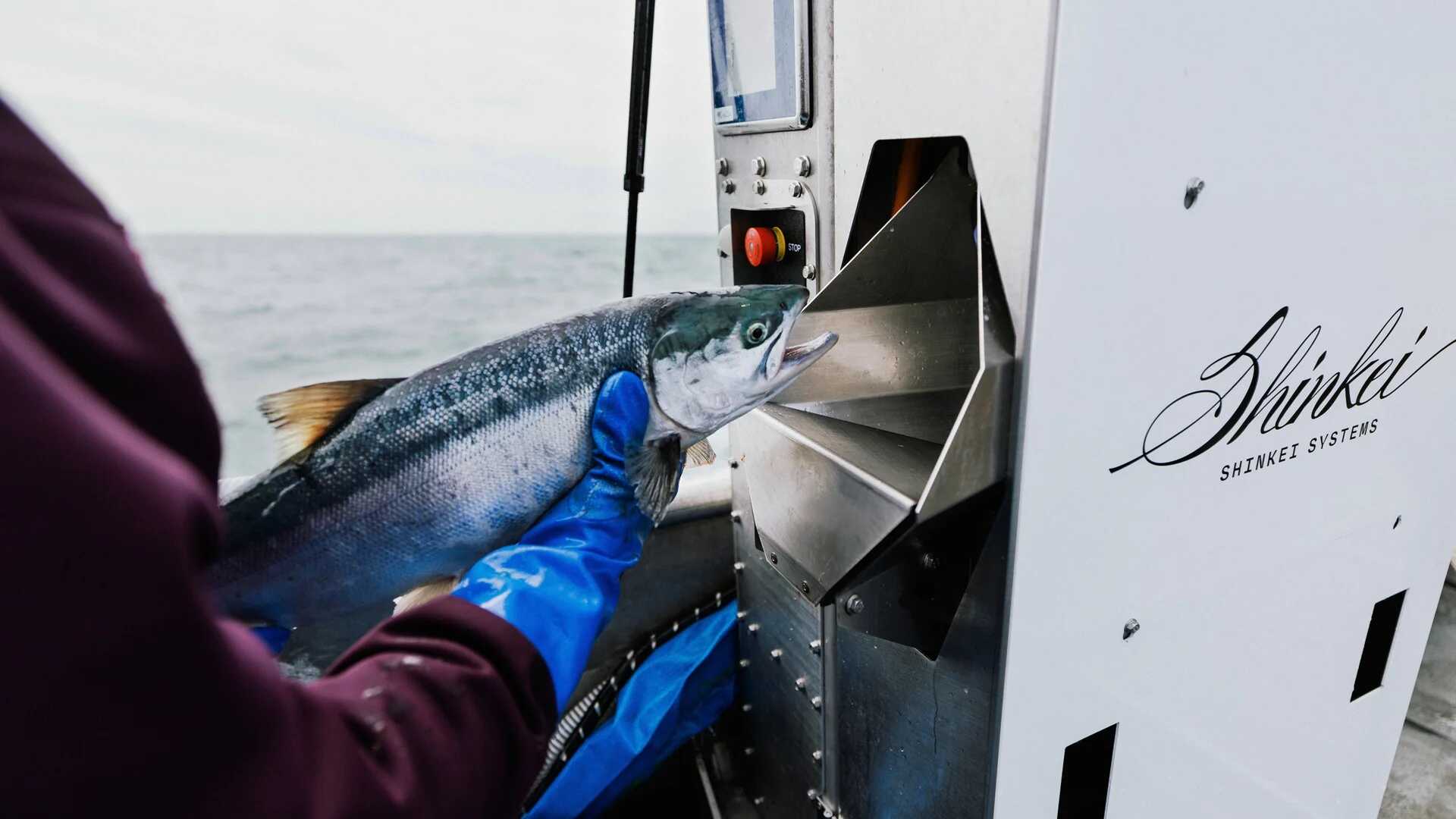
The newcomer is PSDN-S, short for “Poseidon,” a robot built by a startup called Shinkei Systems.
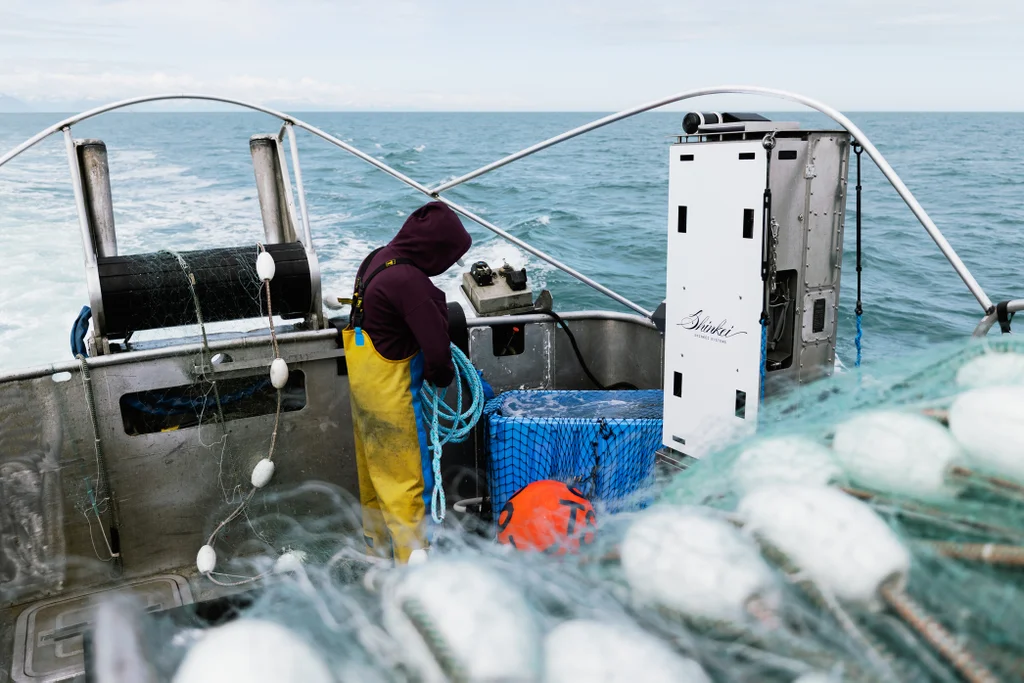
PSDN-S’s process sounds coldly mechanical but is in fact far more compassionate than the traditional methods, which often leave fish to slowly asphyxiate on deck. As crews aboard Shinkei’s partner boats navigate the inlet—notorious for its treacherous tidal waters—they hand feed salmon they’ve caught into the robot, a tall metal box bolted to the deck. Inside, computer vision helps the machine identify the species, locate a half-inch spot on the skull, and drive a spike through the hindbrain before severing the gills. The whole cycle takes about six seconds, depositing the fish in ice before it can thrash.
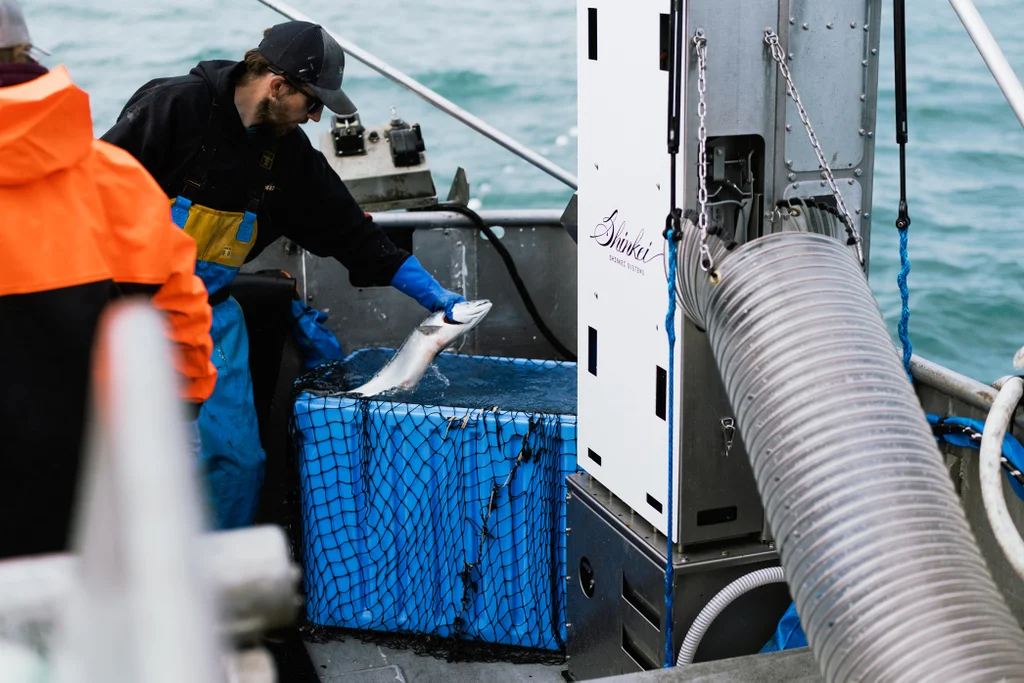
“We’re basically doing the equivalent of surgery on these fish in a very difficult maritime environment,” Shinkei’s cofounder, Saif Khawaja, said as we watched footage of the process together recently over a Zoom call.
The Shinkei model
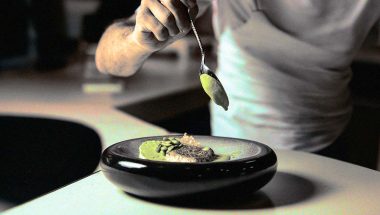
PSDN-S replicates ike jime, the exacting slaughter technique long required for fish served at top sushi restaurants in Tokyo, Los Angeles, and New York. The method is hands-down the most humane way to kill a fish. Not incidentally, chefs at high-end restaurants including Daniel and Atelier Crenn believe Shinkei fish simply taste better.
Shinkei is an El Segundo, California-based company that Khawaja founded four years ago in New York, before coming to believe that all the serious engineers are in California. (Significantly, and in keeping with the company ethos, the Japanese word shinkei translates as “sensitive.”) Shinkei installs the PSDN-S robot for free and pays fishermen a premium for their catch. In exchange, it takes full possession of the fish, keeping it off the open market. The company then processes, distributes, and sells the seafood itself, under its own consumer brand, Seremoni.
Until this summer, Shinkei was using this method to process just a handful of fish types that most American consumers don’t eat very often: black cod, black sea bass, red snapper, vermilion rockfish. This was by design, Khawaja tells me: “We chose to avoid the most popular fish in the American diet” to show “what we could do with beautiful, artisanal noncommodity fish.”
Now, PSDN-S is being deployed toward the most popular fish in the country, which Shinkei says will begin rolling out at restaurants and retail partners in the coming weeks. Last year, 200 million salmon were harvested in Alaska during the brief fishing season, and Americans put away 200,000 metric tons, making them the planet’s number one consumer.
The case for PSDN-S
PSDN-S’s predecessor, the full-sized PSDN, has won attention for its innovations in animal welfare and sustainability (including a spot on Fast Company’s 2026 list of the Most Innovative Companies in Food). The robot helps mitigate the guilt that people feel about eating creatures that feel pain. But Khawaja argues that an equally big selling point—and why backers including Founders Fund have invested $22 million so far—is the fish’s better shelf life, and what that makes possible: More people can have access to fresh, high-quality seafood.
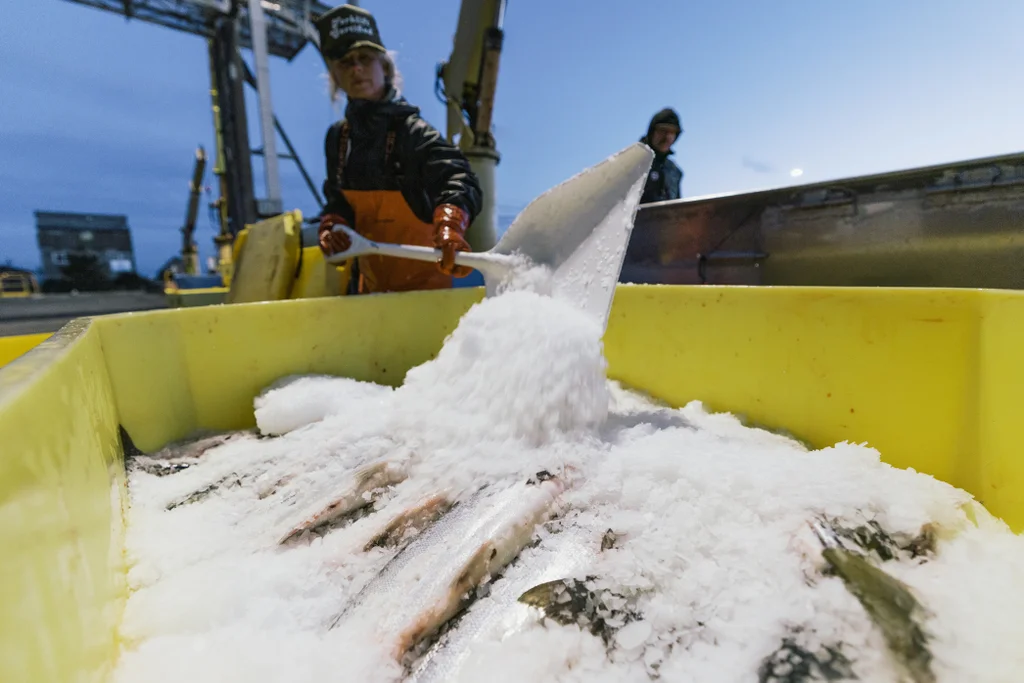
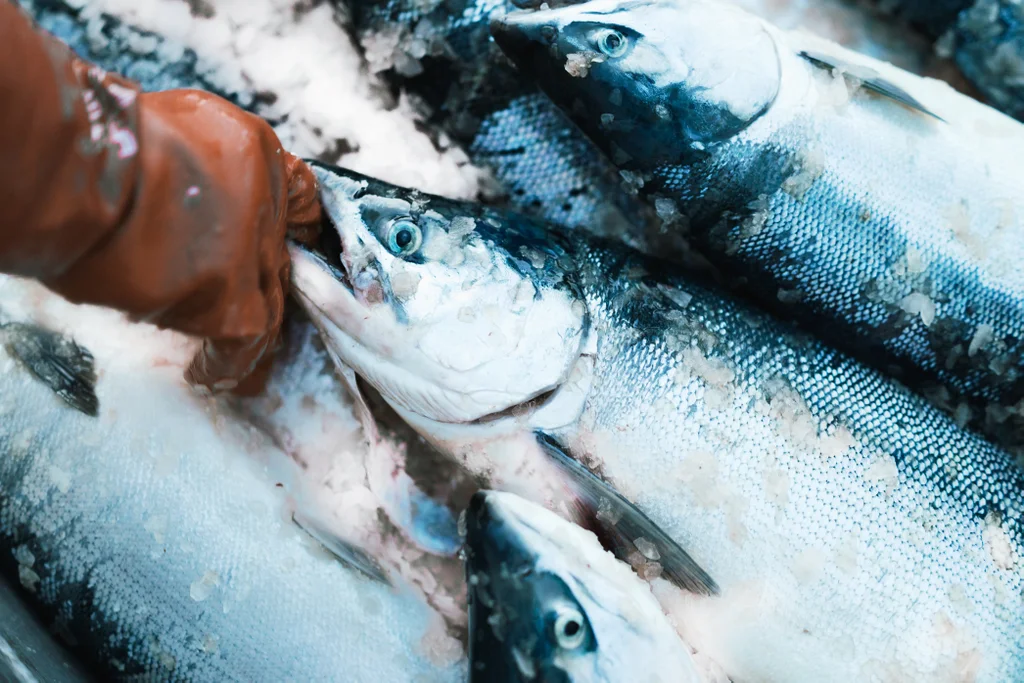
When fish are harvested aboard typical commercial vessels, the process causes fish to release stress hormones, and lactic acid leaches into the flesh, priming it for duller flavor, mushier texture, bacterial growth, and a shelf life of five to seven days for most species. Shinkei says that its fish, by contrast, can last for two to three weeks.
Estimates suggest that as much as 35% of the global fish harvest goes to waste because it spoils. The most recent snapshot, calculated in 2023, found the U.S. loss rate to be 23% of the total edible supply. A recent study on reducing seafood loss, conducted by researchers with the UN Food and Agriculture Organization, Cambridge University, and a university in China, explained that the best way to feed our future selves isn’t by catching more fish (we sort of . . . can’t), but by reducing our excessive waste.
Salmon was never meant to travel quite that far
There’s an industry quirk that exacerbates the fish-waste problem: Much of the fish sold in U.S. grocery stores is first shipped to Asia for processing—e.g., the messy, grisly work of gutting, scaling, and filleting. This arrangement has drawn fire in the U.S. from across the political spectrum, rankling everyone from China hawks to labor activists to food-waste watchdogs.
In March, Shinkei more than doubled its domestic production footprint with a 16,000-square-foot facility in Tacoma, Washington. It’s here that both Shinkei and Founders Fund are betting the startup can bring the U.S. fish supply chain back on shore by becoming a vertically integrated harvester and processor, deploying robotics from boat to plate for a virtually inexhaustible roster of species. (Khawaja says more challenging fish shapes, like of swordfish and flounder, are off the table, at least for now.)
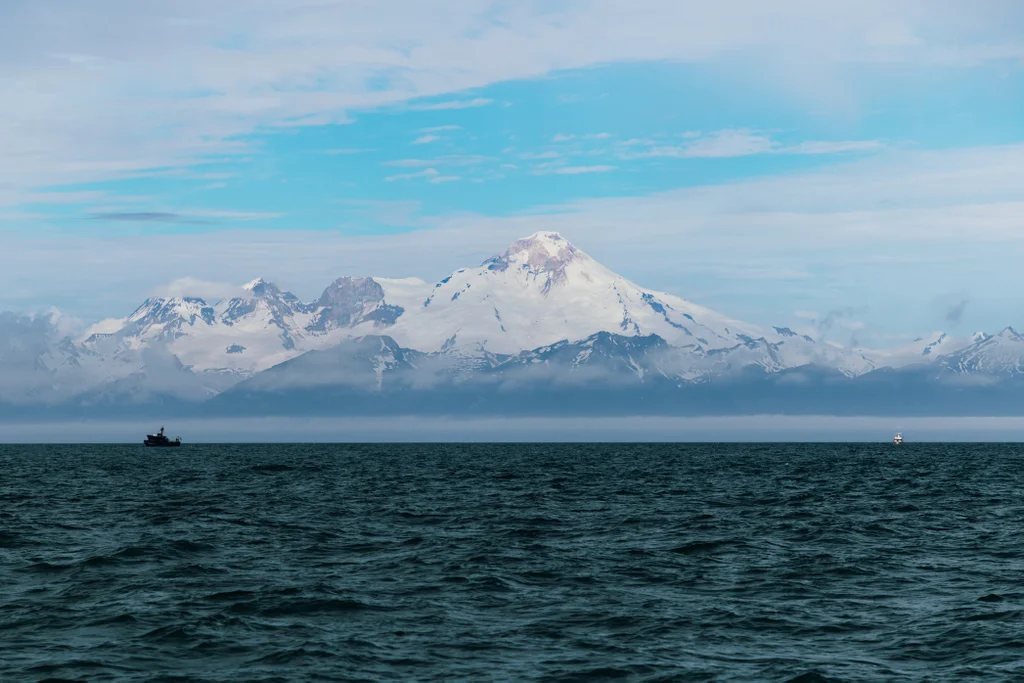
Partnering with Alaskan fishers is a big first step in that direction. Alaska accounts for roughly 60% of U.S. seafood, nearly 6 billion pounds a year. Yet about two-thirds of that catch is exported. Meanwhile, as much as 85% of the seafood sold in American grocery stores has been imported, a carousel dance where we ship our fish to other countries, then buy back theirs—about half from Chile, much of the rest from Norway and Canada.
The sockeye now coming off boats, prized for their deep-red color and robust flavor, are an early test of whether the model can handle a fish that pretty much everyone eats. Compared with boats harvesting something like black cod (8 to 10 million per year) or vermillion rockfish (closer to 200,000), Khawaja says, “The volume that they’re pulling out of the water is absolutely mental.”
Who will speak for the fish?
Khawaja likes to trace Shinkei’s humane-slaughter idea back to an essay by the Animal Liberation author Peter Singer. Khawaja grew up in Dubai taking family fishing trips and later dropped out of grad school at Penn after winning a prize that gave him $100,000 to chase what became Shinkei. But it was Singer’s “If Fish Could Scream,” published in 2010, during a cultural reckoning over fish ethics, that stuck with him. Commercial fishing inflicts “an unimaginable amount of pain and suffering” on fish, Singer argued, but it hardly registers for us because fish “cannot give voice to their pain.”
Obsessed, Khawaja tried building a sensor he could attach to a fish’s body that would trigger noise intensifying as its stress rose internally—a technological scream. The problem, he quickly realized, was that nobody wanted to listen to screaming fish. He instead focused on the commercial end of things, the fact that treating fish better also made them taste better and sell for more.
To train PSDN-S, Khawaja and Reed Ginsberg—Shinkei’s chief technology officer and cofounder—asked fishermen to bring in around 50 species of live fish, from little 1-pounders to 25-pound whoppers. They used cameras to capture images of them from every angle, so that Shinkei’s AI models could recognize them if they’re placed into the machine at a funny angle, or even upside down.
Sorting salmon was easy. The hard part was installing a fish-killing robot on vessels the size of a city bus navigating 10-foot swells. “Boats in Alaska for wild salmon are limited to 32 feet, as the maximum size,” Ginsberg tells me. The PSDN-S is the result of Shinkei’s listening to fishermen who were eager to join the fleet, but had a sort of reverse-Jaws request first: “You’re gonna need a smaller bot.”
Ginsberg had joined Shinkei from SpaceX, where he led the Starship Avionics group and designed hardware for Star Shield, the government version of Starlink. His job was to build things that could survive violent shocks, thermal radiation, extreme temperature swings—stuff that “goes really, really far away and you don’t get to access it again.”
Fishing boats, it turns out, aren’t so different. Engines run hot, waves cause intense vibrations, decks bake in the Gulf sun and freeze in the Bering Sea. “Corrosion is even worse than aerospace,” Ginsberg adds, calling the ocean “probably the harshest environment I’ve designed against.” Because PSDN-S also travels to places he can’t access, Shinkei patches in software updates remotely over Starlink. “It’s like having a Tesla,” he explains. “Plus, now they’ve got Wi-Fi on the boat to watch Netflix.”
The ‘boat to plate’ movement
Since Shinkei-caught fish became available commercially two years ago, under the brand name Seremoni, it’s been a hit with chefs across the country; the fish has appeared on plates of several dozen Michelin-starred restaurants. Chef Dan Barber—whose restaurant Blue Hill at Stone Barns is famous for sustainability (it sources scallops from a husband-wife operation in Maine whose team free dives for them and then ships the live catch overnight in cans)—has called Seremoni “the platonic ideal” of what fish should taste like. It’s available to shoppers at Erewhon, Wegmans, and Fresh Direct. Last year, it debuted at Tokyo’s Toyosu fish market, marking the first time wild-caught black cod was sold there in 17 years.
Now Shinkei is pushing its technology farther. It’s preparing a new sensor, dubbed NERA, that scans fish to assign each one its own date when it will reach optimal quality—what Khawaja calls its “ripeness.” It’s a disorienting way to think about an animal pulled from the ocean. But he showed me a chart plotting the data as if we were discussing a piece of fruit. “Think of it like a banana,” he offered. “You don’t want it green, and you don’t want it black. You want it yellow.” For regular fish, this window is incredibly brief. But the Shinkei method widens it considerably.
For now, NERA is still appliance-sized, just like PSDN 1.0 was, and it runs only in Shinkei’s El Segundo factory. But Khawaja’s ambition is to create sensors that can be used anywhere along the supply chain. “If we shrink them down enough, we can put scanners at the dock where fish are coming in, and at the grocery store where the labels are being printed,” he says.
He says that if you go eat the fanciest $500-a-person omakase, the chef will have watched the fish carefully, sometimes for days, to see when the texture begins to stiffen, an indication that the flavor is at its peak. Khawaja sees no reason the same shouldn’t be true for fish sitting in the average American household fridge.

Featured Videos
Today's Top Stories:
More Top Stories:



FROM OUR PARTNERS