The UAE is building greener homes. But are they actually better to live in?
As UAE developers trade golf courses for agritech and barefoot pathways, real estate sustainability is evolving from a corporate trophy into a daily lifestyle.
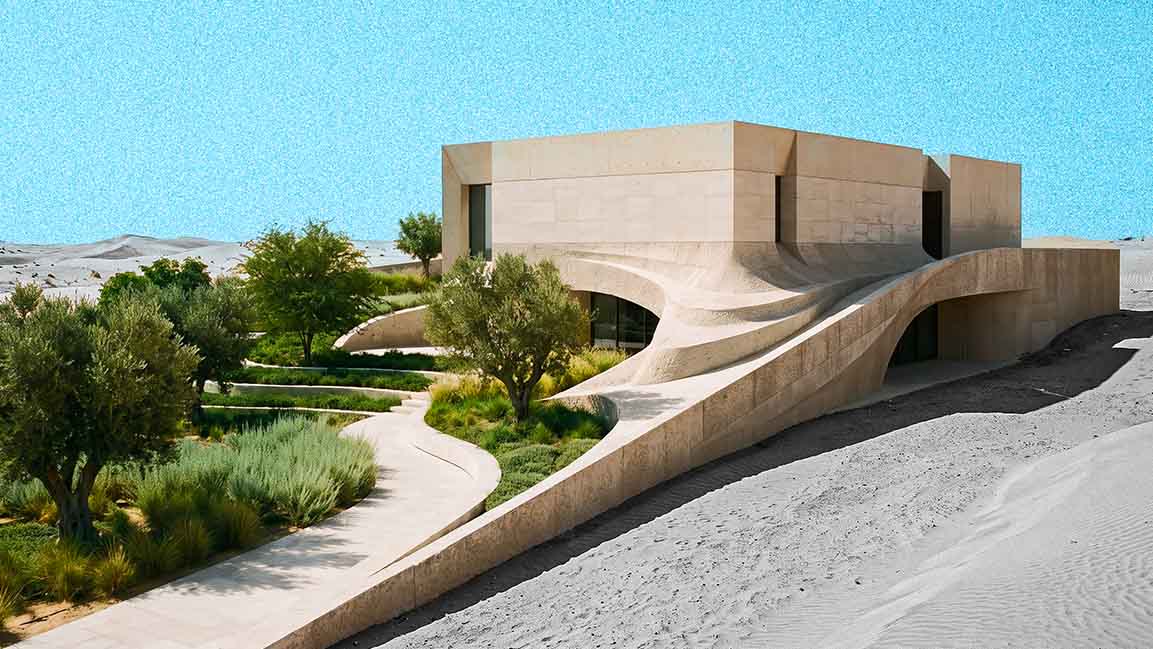


Across Dubai and Abu Dhabi, high-rises once sold purely on opulence are now driven by green certifications, smart-home automation, and net-zero commitments. Mega-developments tout biodomes, solar-powered agritech labs, and shaded microclimates.
Yet beyond the glossy renderings and LEED badges, is climate-conscious real estate actually creating better places to live?
THE NEW URBAN HARVEST
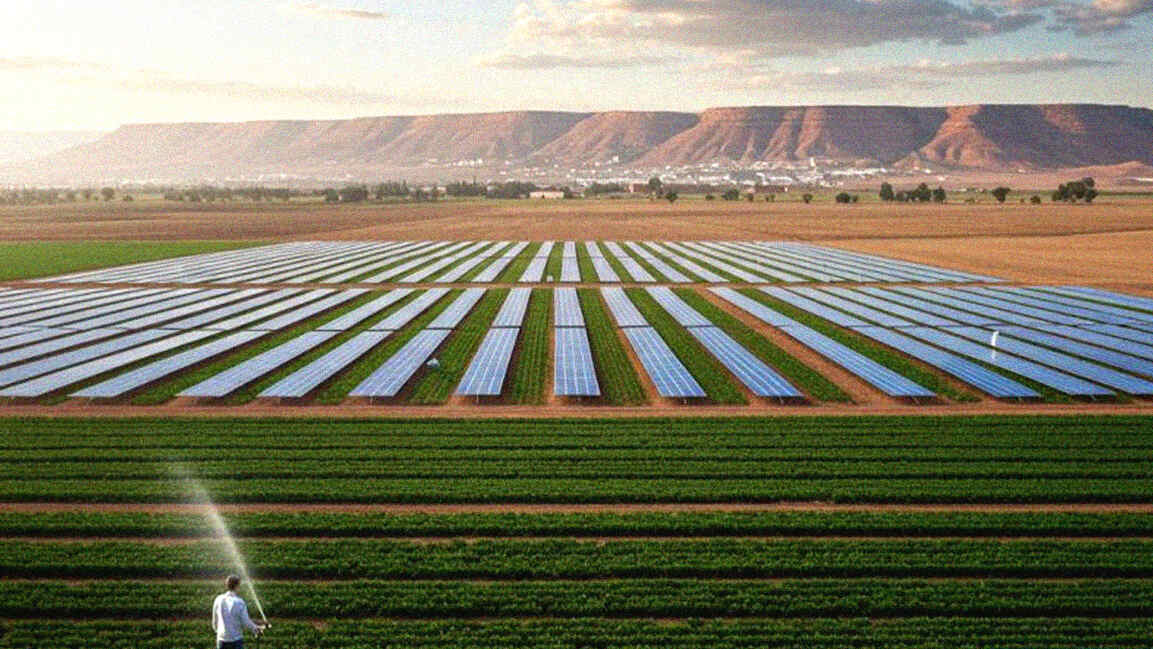
Master-planned luxury communities in the UAE have long relied on emerald-green lawns and sprawling golf courses—landscaping formats imported from vastly different climates. That focus is now pivoting toward localized agriculture and residential farming.
In Dubai, Emaar Properties’ Farm Gardens at The Valley features villa plots integrated alongside community orchards and farming allotments where residents cultivate their own produce. In Abu Dhabi, the announced Qitaf City project spans four million square meters in Al Haffar, pairing townhouses and villas with commercial farming, solar-driven agritech research facilities, and aquaculture infrastructure to boost national food security.
Smaller, targeted initiatives are also appearing closer to urban centers. The Dubai Silicon Oasis Community Farm provides seasonal garden plots between September and May, while the Al Hamriyah Municipal Community Farm offers 20,000 square meters of public space featuring fruit trees, a nursery, composting facilities, and beekeeping stations.
In Sharjah Sustainable City, residents cultivate their own chemical-free produce in community agri-pods, while vertical-farming biodomes throughout the development enable fresh fruit and vegetables to be grown year-round.
“The value for residents shows up in small, everyday ways,” says Eng. Ammar Tawfeek, project director at Sharjah Sustainable City.
“Families are eating fresher food that has traveled meters rather than thousands of kilometers. Children are learning where their food comes from, and many of them are planting their first seeds here. Neighbors who might otherwise only wave to each other are now swapping tips over a garden bed. Over time, these shared spaces have become some of the most social spots in the community.”
OVERCOMING THE WALKABILITY CHALLENGE
Beyond agriculture, creating walkable cities requires overcoming a severe environmental barrier: summer temperatures that routinely top 40°C. Historically, regional urban planning prioritized multi-lane highways and enclosed shopping malls over street-level pedestrian movement.
To challenge this, real estate firms are turning to microclimate engineering, high-density shading, and direct connections to public waterfront corridors.
“Walkability in the UAE needs a pragmatic solution that takes into account the climate and how people live their lives,” says Abhishek Jalan, CEO of Grovy Developers. “Although we as developers cannot address the issue of urban mobility alone, we can do our part by ensuring access to pedestrian paths, landscaping, and common areas that make the outdoors more appealing.”
Other developers are weaving movement directly into their architectural layout. At R.Evolution’s longevity-focused EYWA Tree of Life project in Dubai, architectural orientation is used to limit direct solar heat gain, complemented by physical design features intended to encourage movement.
“Both our projects connect to the Dubai Water Canal promenade, giving residents access to a waterfront route for walking and outdoor activity,” says Alex Zagrebelny, founder and CEO of R.Evolution. “Within the building, movement is also encouraged through a 500-meter barefoot pathway on the amenity floor, designed as a calm sensory walking experience.”
EV CHARGING BECOMES BASELINE STANDARD
As electric vehicle ownership expands across the UAE, residential charging infrastructure is transitioning from a high-end perk into a baseline feature of multi-family housing.
“100% of our current portfolio incorporates EV charging infrastructure,” says Madhav Dhar, co-founder and CEO of Dubai-based ZāZEN Properties. “EV charging may not determine every purchase today, but over the coming years, not having the infrastructure is likely to become more noticeable than having it. That is usually when an amenity becomes an expectation.”
Dhar stresses that residential architecture must reflect long-term ownership horizons. “When we design a development today, we’re creating something people may live in or own for the next 10, 15, or 20 years.”
To avoid costly retrofits later, master planners are building scalable power capacity into parking podiums.
Grovy Developers’ Ramada Residences by Wyndham uses smart parking systems to track individual energy consumption per vehicle, while R.Evolution’s EYWA Tree of Life has laid the infrastructure to expand to 11 charging bays as resident demand increases.
“We see this becoming a standard expectation in residential development in the coming years,” says Zagrebelny, noting that the company has integrated EV charging across most of its portfolio and is actively retrofitting older properties to keep pace with demand.
UTILITY SAVINGS VS LIVED EXPERIENCE
Quantifying the true value of green spaces, building automation, and resource management systems remains one of the more complex tasks in modern real estate development.
“Certifications are important because they create standards and accountability, but they should be the outcome of good development rather than the objective itself,” Dhar says. “Dubai Municipality’s 2026 guidance similarly links energy and water efficiency with lower operating and maintenance costs, better indoor environmental quality, and stronger asset value.”
However, technical performance represents only half the equation.
“The value of greenery cannot be associated solely with aesthetics,” says Jalan. “Landscaping provides thermal comfort and shade. In measuring the value of landscaping, one should consider both performance and resident perception.”
To maintain large botanical footprints without draining municipal supplies, developments rely heavily on treated sewage effluent, greywater recycling, and automated weather-responsive drip irrigation.
Ultimately, assessing whether resource-efficient real estate improves daily life depends on human behavior and whether homeowners actively occupy and use these spaces.
“Not everything that creates value for residents can, or should, be reduced to a single metric,” says Dhar.
“Once people move in, we look at a simpler question: are they actually using the spaces we created? Are residents walking and spending time outdoors? Do neighbors have places where they naturally meet and interact? These behaviors help distinguish between landscaping that looks good and green space that genuinely contributes to community life.”

Featured Videos
Today's Top Stories:
More Top Stories:

FROM OUR PARTNERS